Fintech
FintechZoom.com: A Smart Resource for Financial News, Investment Education


Introduction
In today’s fast-moving financial landscape, staying informed is more important than ever. Investors, entrepreneurs, students, and everyday consumers all rely on accurate financial information to understand market movements and economic trends. FintechZoom.com has emerged as a website that covers a broad range of financial topics, including stock markets, cryptocurrencies, banking, fintech innovation, commodities, and personal finance. Its content is designed to help readers understand complex financial subjects in a straightforward and accessible way. As digital finance continues to evolve, platforms that provide timely updates and educational resources are becoming increasingly valuable. FintechZoom.com aims to bridge the gap between technical financial information and everyday readers by publishing articles that explain current events, investment strategies, and technological developments. Although financial decisions should always be based on thorough research and professional guidance when necessary, the website offers useful information for anyone seeking to improve their financial knowledge and stay updated with global market activity.
The Growing Importance of Financial Information
Financial information influences almost every aspect of modern life. From household budgeting to retirement planning and investment decisions, people need reliable information to manage their finances effectively. FintechZoom.com recognizes this growing demand by publishing articles that discuss economic developments, investment opportunities, and financial technology. Understanding inflation, interest rates, employment data, and government policies allows readers to make more informed financial decisions. Instead of presenting complicated financial terminology without explanation, the platform often simplifies difficult concepts for readers with different levels of experience. This educational approach makes financial knowledge more accessible while encouraging readers to continue expanding their understanding of the global economy. As financial literacy becomes increasingly important, resources like FintechZoom.com can contribute to better financial awareness and more confident decision-making.
Exploring Stock Market Opportunities
Stock market investing remains one of the most popular methods of building long-term wealth. FintechZoom.com frequently covers stock market developments, company earnings, industry trends, and economic events affecting investor sentiment. Readers can learn about how market performance responds to corporate results, consumer demand, technological innovation, and broader economic conditions. Educational content often introduces investment concepts such as diversification, risk management, and long-term portfolio growth. These articles help beginners understand that successful investing involves patience, research, and realistic expectations rather than short-term speculation. By explaining the reasons behind market movements, FintechZoom.com encourages readers to think critically about investment decisions instead of reacting emotionally to daily price fluctuations.
Understanding Cryptocurrency Through FintechZoom.com
Cryptocurrency has transformed discussions about digital finance over the past decade. FintechZoom.com regularly explores developments involving Bitcoin, Ethereum, blockchain technology, decentralized finance, and digital asset regulations. As cryptocurrencies continue attracting institutional and retail investors, educational content becomes increasingly valuable for understanding this evolving market. Articles explain how factors such as government regulations, technological innovation, market demand, and investor confidence influence cryptocurrency prices. Beyond discussing digital assets themselves, the platform also introduces readers to blockchain technology and its potential applications across industries including banking, healthcare, logistics, and digital identity. This broader perspective helps readers understand why blockchain is considered one of the most significant technological innovations in modern finance.
Fintech Innovation Reshaping Financial Services
Technology continues changing the way financial services operate. FintechZoom.com highlights innovations including mobile banking, artificial intelligence, contactless payments, online lending, robo-advisors, and cloud-based financial services. These technologies improve convenience, efficiency, and accessibility for consumers while creating new opportunities for businesses and financial institutions. Digital banking allows customers to manage accounts, transfer funds, and monitor investments from virtually anywhere. Meanwhile, artificial intelligence supports fraud detection, customer service, and financial analysis. FintechZoom.com explains these technological developments in practical terms, helping readers understand how innovation continues transforming everyday financial activities while introducing important discussions about cybersecurity and data protection.
Business News and Economic Developments
Business performance and economic conditions directly influence investment markets and consumer confidence. FintechZoom.com regularly publishes articles covering corporate earnings, mergers, acquisitions, inflation, central bank decisions, and international trade. Understanding these developments helps readers recognize why financial markets react to economic announcements and business performance. Economic indicators such as unemployment rates, inflation data, and gross domestic product provide valuable insight into overall economic health. FintechZoom.com explains how these factors influence investors, businesses, and households alike. Readers who follow economic news consistently often develop a better understanding of market cycles and long-term investment trends.
Personal Finance for Everyday Success
Financial success depends on more than investment returns. Responsible budgeting, saving, debt management, and retirement planning are equally important aspects of financial well-being. FintechZoom.com includes articles discussing practical personal finance strategies that readers can apply in their daily lives. Topics frequently include emergency savings, credit management, mortgage planning, insurance, and financial goal setting. Building strong personal finance habits creates a solid foundation before pursuing investment opportunities. Readers who understand cash flow management and responsible spending are generally better prepared to navigate economic uncertainty while working toward long-term financial stability.
Why Financial Education Matters
Financial education empowers individuals to make better decisions throughout every stage of life. FintechZoom.com contributes to financial literacy by explaining investment concepts, economic principles, and technological developments in clear language. As financial products become increasingly sophisticated, continuous learning becomes essential for understanding new opportunities and potential risks. Educational resources encourage readers to ask informed questions, evaluate financial information critically, and avoid making decisions based solely on headlines or market speculation. Strong financial literacy supports responsible investing, effective budgeting, and long-term wealth creation while reducing the likelihood of costly financial mistakes.
Using FintechZoom.com as Part of Your Research
Although FintechZoom.com provides valuable financial information, responsible research always involves consulting multiple reliable sources. Official company filings, government publications, central bank reports, and established financial news organizations provide additional perspectives that strengthen investment research. Comparing information from several trusted resources helps readers identify consistent trends while avoiding misinformation or incomplete analysis. FintechZoom.com works best as one component of a comprehensive research strategy that prioritizes independent thinking, careful evaluation, and disciplined financial planning.
Conclusion
FintechZoom.com continues attracting readers who want to stay informed about financial markets, investment opportunities, cryptocurrency developments, fintech innovation, business news, and personal finance. Its accessible writing style makes financial topics easier to understand while encouraging continuous learning about the changing global economy. Whether someone is beginning their financial education or following current market developments, the platform offers useful insights across multiple financial sectors. When combined with independent research and trusted financial resources, FintechZoom.com can help readers develop stronger financial knowledge and greater confidence in understanding today’s rapidly evolving financial world.

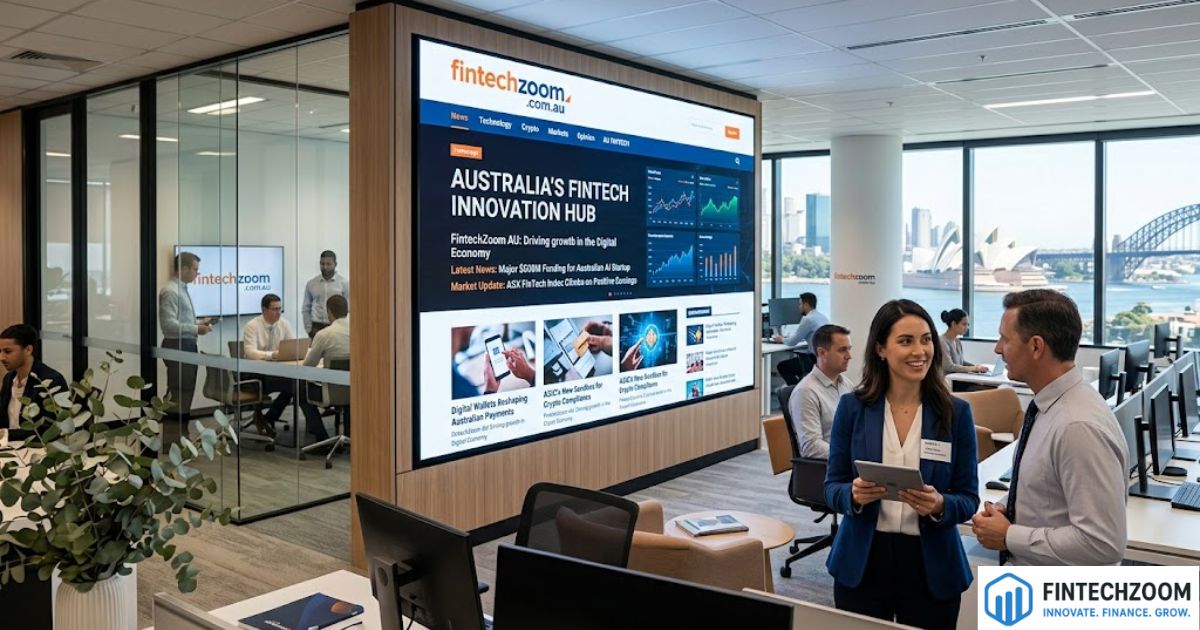
The financial sector in Australia is currently undergoing its most significant structural transformation since the introduction of the floating dollar. At the heart of this evolution is fintechzoom.com.au, a platform that has become a vital resource for navigating the “Velocity Economy” of 2026. As the Australian Prudential Regulation Authority (APRA) continues to refine its oversight of digital-first entities, consumers and businesses alike are seeking clear, data-driven insights into how these changes affect their daily transactions and long-term wealth.
The traditional “Big Four” banks are no longer the only pillars of the economy; instead, a dense network of decentralized finance (DeFi) protocols, neobanks, and automated investment platforms is defining the new standard. For the modern Australian professional, understanding the mechanics of fintechzoom.com.au is essential for maintaining a competitive edge. This guide explores the essential pillars of the modern domestic market, providing the strategic tips needed to thrive in an era defined by instant liquidity, smart contract transparency, and a renewed focus on personal financial sovereignty.
The Maturation of Open Banking and CDR 2.0
By 2026, the Consumer Data Right (CDR) has evolved into its most potent form, often referred to as CDR 2.0. This regulatory framework has moved beyond simple data sharing to “Action Initiation,” allowing third-party applications to perform transactions on behalf of the user with explicit consent. This shift has effectively dismantled the data silos that previously protected legacy institutions. For the average consumer, this means that an app can automatically move funds between accounts to maximize interest or pay bills at the exact moment they are due, ensuring zero late fees and optimized cash flow.
The technical infrastructure supporting this is now more robust, utilizing standardized APIs that offer near-instant connectivity. This interoperability has given rise to “Hyper-Personalized” financial dashboards that provide a holistic view of an individual’s net worth, including superannuation, digital assets, and physical property. As these systems become more intuitive, the barrier to entry for sophisticated financial management has dropped significantly. The focus in 2026 is on “Permissioned Transparency,” where the user remains the ultimate gatekeeper of their data, leveraging it to secure better mortgage rates, lower insurance premiums, and more tailored investment advice.
AI-Augmented Wealth Management for Retail Investors
The “democratization of alpha” is a defining trend of the 2026 Australian market. Artificial intelligence has transitioned from a backend processing tool to a frontend “Financial Copilot” for retail investors. These AI agents analyze global market sentiment, domestic economic indicators, and individual risk profiles to suggest real-time portfolio rebalancing. This level of sophisticated management, once reserved for high-net-worth individuals, is now available to anyone with a smartphone. The emphasis is on “Fractional Intelligence,” where users can access high-level strategic insights for a small monthly subscription.
These platforms utilize “Predictive Rebalancing” to mitigate the impact of market volatility. For example, if a sudden shift in global trade affects the Australian dollar, the AI Copilot can automatically hedge the user’s international stock exposure. This proactively protects capital without requiring the user to be a full-time market analyst. Furthermore, the integration of generative AI allows for “Plain English” explanations of complex financial events, helping users understand the why behind their portfolio’s performance. This education-first approach is fostering a more confident and resilient generation of Australian investors who are less likely to make emotional decisions during periods of market stress.
The Rise of CBDCs and Programmable Currency
2026 marks the widespread pilot phase of the “e-AUD,” Australia’s Central Bank Digital Currency (CBDC). Unlike traditional digital bank balances, the e-AUD is a form of programmable money that can carry specific instructions. This innovation is revolutionizing government disbursements, insurance payouts, and corporate supply chains. For instance, a government grant could be programmed to only be spendable on approved business expenses, ensuring high-level accountability and reducing the administrative burden of auditing.
For the private sector, programmable currency enables “Micro-Payments” and “Streaming Salaries.” Instead of receiving a lump sum every fortnight, employees can choose to have their wages streamed to their wallets in real-time as they complete their work hours. This level of liquidity is a game-changer for household budgeting and significantly reduces the reliance on high-interest short-term credit. As the Reserve Bank of Australia (RBA) continues to integrate the e-AUD into the core of the domestic payment system, the distinction between “traditional” and “digital” finance is rapidly disappearing, creating a unified, high-velocity monetary environment.
Decentralized Finance and the Institutional Bridge
Decentralized Finance (DeFi) has moved out of the “Wild West” phase and into a period of institutional integration. In 2026, many Australian superannuation funds are utilizing DeFi protocols to access yield-generating opportunities that were previously inaccessible. This “Institutional DeFi” involves the use of permissioned liquidity pools where all participants have undergone strict KYC (Know Your Customer) and AML (Anti-Money Laundering) checks. This blend of blockchain efficiency and regulatory compliance offers a secure pathway for large-scale capital to enter the decentralized ecosystem.
The primary benefit of this bridge is the reduction of intermediary costs. By using smart contracts to automate lending and borrowing, the “spread” traditionally taken by banks is returned to the participants in the form of higher deposit rates and lower borrowing costs. For the Australian small business owner, this means accessing “On-Chain Credit” that can be secured against digital invoices or tokenized assets. This flexibility is critical in a higher-rate environment, providing alternative funding avenues that are more responsive to the specific needs of the digital economy than traditional commercial lending.
Cybersecurity and the “Trust-First” Framework
As financial life moves entirely onto digital rails, the importance of cybersecurity has escalated from a technical requirement to a “Trust Strategy.” In 2026, Australian firms are adopting “Zero-Trust Architecture” as the baseline. This involves continuous verification of every user and device attempting to access financial data, regardless of their location. Biometric multi-factor authentication, including iris scanning and behavioral biometrics (analyzing how a person types or moves their mouse), has become standard for high-value transactions.
Furthermore, the “Identity-as-a-Service” (IDaaS) model is gaining traction, allowing Australians to use a single, verified digital identity across multiple financial platforms without sharing their sensitive raw data. This is achieved through “Zero-Knowledge Proofs,” a cryptographic method that allows a user to prove they meet a certain requirement (such as being over 18 or having a certain income level) without revealing the underlying information. This “Privacy-Preserving Compliance” is the cornerstone of the 2026 market, ensuring that the digital revolution does not come at the cost of personal data security or individual privacy.
Neobanks and the Pivot to Niche Specialization
The initial wave of general-purpose neobanks has given way to a more sophisticated era of niche specialization. In 2026, we see the rise of “Vertical Neobanks” tailored to specific segments of the Australian population, such as gig economy workers, green-energy entrepreneurs, or the “Silver Tsunami” of retirees. These platforms offer features that traditional banks struggle to replicate, such as automated tax withholding for freelancers or “Eco-Tracking” that offsets the carbon footprint of every purchase made on a debit card.
This specialization is driven by the realization that “one size fits all” banking is no longer competitive. A neobank focused on the construction industry might offer integrated tool insurance and invoice financing, while one focused on retirees might prioritize estate planning tools and high-yield “legacy” accounts. By deeply integrating into the specific lifestyle and business needs of their users, these niche players are carving out highly loyal communities. This “Community-Centric Banking” is a direct response to the perceived facelessness of global financial giants, proving that in 2026, localized relevance is a powerful competitive advantage.
Sustainable Finance and Tokenized Green Assets
Environmental, Social, and Governance (ESG) criteria have moved from a reporting requirement to a primary driver of investment flow. In 2026, the Australian market is a global leader in “Tokenized Green Assets.” This involves the creation of digital tokens that represent a fractional ownership in sustainable projects, such as solar farms in Queensland or reforestation efforts in Western Australia. These tokens allow retail investors to support environmental projects with as little as $50, while earning a return tied to the project’s success.
This “Green Liquidity” is essential for funding the transition to a net-zero economy. For businesses, being “ESG-Verified” is now a prerequisite for accessing lower-cost capital. Fintech platforms are providing automated “Carbon Audits” that allow firms to track and report their sustainability metrics in real-time. As the Australian government implements stricter “Greenwashing” regulations, the transparency provided by blockchain-based reporting is becoming the gold standard. In 2026, financial success and environmental responsibility are no longer seen as opposing goals, but as two sides of the same coin in a mature, conscious economy.
2026 Australian Financial Performance Matrix
| Category | 2024 Benchmark | 2026 Evolution | Key Strategic Benefit |
| Payments | 1-2 Day Settlement | Instant e-AUD / L2 | Real-time business liquidity |
| Investing | Manual / Robo-Advice | AI Financial Copilot | Democratized alpha & hedging |
| Lending | Bank-led / Credit Score | On-Chain / CDR Data | More equitable capital access |
| Security | Password / SMS OTP | Zero-Trust Biometrics | Drastic reduction in fraud |
| Identity | Physical Documents | Zero-Knowledge Proofs | Privacy-preserved compliance |
| ESG | Annual Reports | Tokenized Real-time Tracking | Authentic sustainable growth |
| Banking | General Purpose | Niche / Vertical Banks | Tailored community relevance |
Frequently Asked Questions
1. How does fintechzoom.com.au help me stay compliant with new regulations?
The platform provides real-time updates on APRA and ASIC regulatory shifts, focusing on the practical implications for digital asset holders and fintech entrepreneurs. We offer “Compliance Roadmaps” that simplify the transition to new standards like CDR 2.0.
2. Is the e-AUD safe to use for my small business?
The e-AUD is a central bank-backed digital currency, meaning it carries the same sovereign trust as physical cash. In 2026, it is considered the safest and most efficient medium for domestic business transactions due to its programmable nature and instant settlement capabilities.
3. What is the “AI Financial Copilot” mentioned in the trends?
An AI Copilot is an advanced software agent that integrates with your financial accounts to provide proactive advice, automate savings, and manage investment risks. It is designed to act as a tireless assistant that helps you reach your financial goals faster.
4. How can I invest in tokenized green assets?
Several Australian platforms now offer “Fractal Green Investing.” You can browse verified projects—such as renewable energy plants—and purchase digital tokens representing your share. These are often liquid, meaning you can trade them on secondary markets.
Conclusion
The Australian financial landscape of 2026 is defined by a remarkable convergence of speed, intelligence, and individual empowerment. As explored via fintechzoom.com.au, the traditional barriers between different asset classes and institutions are dissolving, replaced by a fluid ecosystem that prioritizes the user’s needs and data rights. From the mainstream adoption of Central Bank Digital Currencies to the rise of AI agents that manage our wealth with surgical precision, the “Velocity Economy” offers unprecedented opportunities for those willing to adapt.
Success in this era requires more than just financial capital; it requires “Digital Literacy Capital.” Understanding how to navigate Zero-Trust security, leverage Open Banking APIs, and participate in tokenized sustainable markets is the new baseline for prosperity. While the complexity of the market has increased, the tools available to manage that complexity have become equally sophisticated. By embracing a “Trust-First” mindset and staying informed through dedicated platforms, Australians can turn the challenges of this digital revolution into a robust foundation for long-term financial sovereignty. The future of finance down under is no longer a distant vision—it is an active, programmable, and highly rewarding reality.

FintechZoom.com: A Smart Resource for Financial News, Investment Education

How to Defend Drug Crime Charges

Tips for Sourcing Bedding Fabrics

Why British Property Investors Are Leveraging U.S. Real Estate Instead of Cashing Out

Guide to Choosing Industrial Portable Radios

Tips for Protecting Your Rights After an Accident

Why Sophisticated Global Investors Are Using Leverage Instead of Cash in U.S. Real Estate

Tips for Choosing Packaging Bags

Tips for Choosing Between Blinds and Shades

Building a Future, Not Just Buying a Home: Why Melbourne Families Are Choosing Smarter Communities

Why Palm Jumeirah Continues to Define the Future of Ultra-Prime Living in Dubai

How to Shop Smart During Festive Sales Without Compromising on Style?

How Child Custody Decisions Are Made In Boston

Streamlining Payroll Processes for Small Teams

The Future of Waterfront Luxury: Why Hudayriyat Island is Abu Dhabi’s Premier Investment Hub

Why Expanding Game Libraries Is Important for Digital Casinos

Identifying 3463215186: A Guide to Numeric Security

Robthecoins Business: Leading Innovation in Digital Commerce

Best Management Tips Ftasiastock for Business Growth

How to Fix Connectivity Issues HSSGamepad Fast

Contact Spring Hillmed Group: Medical Support and Access

Matching family Easter outfits are stealing the spotlight

Fintechzoom.com.au: Navigating the 2026 Australian Digital Finance Revolution

Temey_07: Future of Digital Content and Strategy

Tomleonessa679: Deep Dive into Digital Identity Management

Incestfl8x: System Update and Performance Framework

белочкш: Meaning, Context, and Its Role in Digital Expression

Betterthisfacts Tips by Betterthisworld: Practical Insights for Smarter Daily Living

Money BetterThisWorld: Financial Growth Mindful Living and Personal Empowerment

BTWradiovent event by BetterThisWorld

Stocks BetterThisWorld: Learn Investing With Calm Focus And Purpose

BetterThisWorld.com Your Source for Motivation Money Guidance Tech Insights and Modern Living

Irobux Login: Accessing Features & Account Security Tips

Betterthisworld Business: Guide to Smart Growth and Modern Success

The Endless Barrel Roll Challenge: Exploring the Internet’s Wildest Gaming Stunt

BetterThisWorldcom: A Comprehensive Guide to Personal Growth

Gaming Vivid2201 Patches: Updates Improvements and Player Experience

Slothokiturbo.net 683786714: Exploring the Platform and Its Features

Helpful Guide Convwbfamily: Care Understanding and Practical Wisdom

BetterThisWorld BetterThisTechs News: Tech Trends and Digital Innovation

www BetterThisWorld com: Guide to the Platform of Growth and Self-Improvement

BTWLetterNews By BetterThisWorld Website

The Transformative Potential of Gaming: An Overview from BetterThisWorld

Better ThisWorld.com: Exploring Purpose Driven Digital Content

Geekzilla Tio Geek: The Ultimate Tech and Culture Platform

Python 54axhg5: Programming Guide for Modern Development

TGArchiveConsole Set Up: Guide for Easy Installation and Smooth Use

Betterthiscosmos Posts Betterthisworld: Ideas Growth and Universal Inspiration

The Online Gaming Event PBLGamevent