Tech
Understanding Pewcetowiec | The PC Enthusiast Culture

The landscape of personal computing has undergone a radical transformation since the late twentieth century. What began as a tool for academic and professional calculations has evolved into a cornerstone of modern entertainment and creative expression. Central to this evolution is the pewcetowiec, a term that describes an individual deeply immersed in the world of personal computers. This subculture is defined by a commitment to performance, customization, and a profound understanding of the underlying hardware that powers today’s digital experiences. As technology continues to advance, the distinction between a casual user and a dedicated enthusiast becomes increasingly pronounced.
For many, the appeal of the platform lies in its open nature. Unlike closed gaming ecosystems or mobile devices, the personal computer offers an unparalleled level of freedom. A dedicated user can swap out components, overclock processors, and fine-tune software settings to achieve a level of performance that exceeds standard consumer expectations. This hands-on approach has fostered a global community where knowledge sharing and technical problem-solving are highly valued. Whether through online forums, competitive gaming events, or local hardware meetups, the influence of this group is felt across the entire tech industry.
In this article, we will examine the various facets of this unique culture. We will look at the history of hardware development, the rise of the “master race” aesthetic, and the technical milestones that have defined the enthusiast journey. By understanding the motivations and practices of the pewcetowiec, we gain insight into the broader trends driving the future of computing. From the pursuit of the highest frame rates to the intricate art of custom liquid cooling, the world of the PC enthusiast is a fascinating blend of engineering and passion.
The Birth of the Personal Computing Era
The roots of enthusiast culture can be traced back to the early 1980s, when the first truly accessible home computers began to hit the market. Before this period, computing was largely the domain of large corporations and research institutions. The introduction of modular systems changed everything, allowing individuals to own and operate powerful machines in their own homes. Early adopters were often hobbyists who were not afraid to open their cases and experiment with memory expansions or peripheral cards. This era laid the groundwork for the DIY spirit that remains a core tenet of the community today.
As the 1990s progressed, the competition between hardware manufacturers intensified. The release of dedicated graphics accelerators marked a turning point, as it allowed for the rendering of complex 3D environments that were previously impossible on home hardware. This period saw the emergence of a distinct identity among users who prioritized gaming and multimedia performance. They were no longer just users; they were pioneers exploring the limits of what a home machine could do. The rise of LAN parties further solidified this identity, as enthusiasts would physically transport their heavy towers to meet and compete with like-minded individuals.
Today, that spirit of exploration continues, albeit with much more sophisticated tools. The transition from simple hobbyist builds to professional-grade workstations has been driven by a constant demand for more power and better aesthetics. The history of this movement is a testament to human curiosity and the desire to master the tools of the digital age. By looking back at these early milestones, we can appreciate just how far the technology and the community have come.
Architectural Foundations and Hardware Choices
At the heart of any high-performance build is the selection of components. The process of choosing a central processing unit, a graphics card, and a motherboard is akin to a complex puzzle where every piece must fit perfectly to achieve the desired result. Enthusiasts spend hours researching benchmarks, power requirements, and thermal signatures to ensure their machine operates at peak efficiency. This technical literacy is a defining characteristic of the pewcetowiec, who views the internal architecture of the computer as an art form as much as a functional necessity.
The current market offers an overwhelming variety of choices, from multi-core processors designed for heavy multitasking to high-frequency chips optimized for gaming. The motherboard serves as the nervous system, connecting all these parts and providing the necessary pathways for data to travel. Selecting a board with robust power delivery and modern connectivity features is essential for those who plan to push their hardware to its limits. Memory also plays a critical role, with high-speed modules and low latencies becoming increasingly important for modern software and games.
Beyond the core components, the choice of storage has also seen a revolution. The shift from mechanical hard drives to ultra-fast solid-state drives has virtually eliminated load times and improved system responsiveness across the board. For the enthusiast, every millisecond counts, and the ability to access data almost instantaneously is a major advantage. This focus on the “best of the best” ensures that the enthusiast’s machine is always at the cutting edge of what is technologically possible.
Thermal Management and Custom Cooling Solutions
One of the greatest challenges facing high-performance computing is the generation of heat. As components become more powerful, they consume more electricity and produce more thermal energy. Managing this heat is a primary concern for any serious builder. While standard air coolers are sufficient for most users, those who identify as a pewcetowiec often look toward more advanced solutions. Custom liquid cooling loops have become a status symbol within the community, offering both superior thermal performance and a striking visual appeal.
A custom loop involves a complex arrangement of pumps, radiators, reservoirs, and water blocks that circulate coolant directly over the hottest components. This method is far more efficient than air cooling and allows for higher stable clock speeds through a process known as overclocking. The planning and assembly of such a system require a high degree of skill and patience, as one mistake could lead to a catastrophic leak. Despite the risks, the reward is a near-silent machine that can handle the most demanding tasks without breaking a sweat.
For those who prefer a more traditional approach, the market for high-end air coolers and high-airflow cases is also thriving. Modern case designs prioritize thermal dynamics, featuring mesh panels and strategic fan placements to ensure a constant supply of fresh air. Understanding the principles of static pressure and CFM (cubic feet per minute) is part of the enthusiast’s toolkit. By mastering the balance between noise and cooling, builders can create environments where their hardware can thrive for years to come.
Aesthetics and the Rise of RGB Lighting
While performance is paramount, the visual presentation of a machine has become equally important in recent years. The era of the “beige box” is long gone, replaced by tempered glass panels and vibrant internal lighting. RGB (Red, Green, Blue) LEDs allow users to customize the color and patterns of almost every component, from the fans to the RAM sticks. This has turned the computer into a piece of digital art, reflecting the personality and style of its creator. A pewcetowiec often takes great pride in the cleanliness of their cable management and the symmetry of their lighting setup.
This trend toward personalization has led to a massive market for aesthetic accessories. Sleeved power cables, custom GPU backplates, and even small LCD screens inside the case have become popular additions. The goal is to create a cohesive look that is as impressive to look at as it is to use. Some builders opt for a minimalist, stealthy aesthetic with no lighting at all, focusing instead on high-quality materials like brushed aluminum or wood. Others embrace the “cyberpunk” look, with neon colors and futuristic designs.
Software also plays a role in this aesthetic revolution. Dedicated control hubs allow users to synchronize their lighting across all their peripherals, from the keyboard and mouse to the internal components. This create a unified experience that enhances immersion during gaming or provides a calming atmosphere during work. The focus on aesthetics proves that for the modern enthusiast, the computer is more than just a tool; it is a centerpiece of their personal space.
The Competitive Edge in Modern Gaming
For many, the primary motivation for maintaining a high-end PC is the pursuit of the ultimate gaming experience. The ability to play titles at 4K resolution with high frame rates and ray-tracing effects is a major draw. In the world of competitive eSports, the hardware can provide a tangible advantage. Higher refresh rate monitors, combined with low input lag, allow players to react faster and with more precision. A pewcetowiec understands that every frame matters when competing at the highest levels of play.
The PC gaming library is also incredibly diverse, ranging from massive open-world RPGs to intricate strategy games and indie gems. The ability to use a wide variety of input devices, including specialized mice, mechanical keyboards, and flight sticks, adds another layer of depth to the experience. Furthermore, the modding community is a significant part of the ecosystem. Enthusiasts often install community-created mods to enhance graphics, add new content, or fix bugs in their favorite games. This longevity is something that console platforms often struggle to match.
Digital distribution platforms have also made it easier than ever to manage a massive collection of games. Features like cloud saves, social integration, and frequent sales have made PC gaming more accessible and affordable. However, the heart of the experience remains the hardware. Knowing that your machine is capable of running the latest titles at maximum settings provides a sense of satisfaction that is central to the enthusiast’s identity.
Software Optimization and System Tuning
Owning powerful hardware is only half the battle; knowing how to optimize the software environment is equally important. A dedicated pewcetowiec spent a significant amount of time “de-bloating” their operating system, removing unnecessary background processes, and fine-tuning driver settings. The goal is to ensure that as many system resources as possible are dedicated to the task at hand. This level of control over the software layer is one of the primary advantages of the PC platform over its competitors.
Overclocking is perhaps the most famous form of system tuning. By increasing the voltage and frequency of the CPU or GPU, users can squeeze extra performance out of their existing hardware. This requires a careful balance, as pushing too hard can lead to system instability or permanent damage. Specialized benchmarking tools and stress tests are used to verify that the system is stable under load. For the enthusiast, the process of finding the “sweet spot” where performance is maximized without compromising longevity is a deeply rewarding challenge.
Beyond performance tuning, software customization also extends to the user interface. Custom desktop skins, specialized file managers, and automated scripts for repetitive tasks are common among power users. This allows for a workflow that is perfectly tailored to the individual’s needs. By mastering both the hardware and the software, the enthusiast creates a machine that is truly an extension of themselves, capable of handling everything from high-end video editing to intense gaming sessions with ease.
Community, Knowledge Sharing, and the Future
The world of high-performance computing is not a solitary one. It is supported by a massive, vibrant community that spans the entire globe. Online platforms like Reddit, specialized forums, and Discord servers provide a space for users to ask for advice, show off their latest builds, and discuss the newest hardware releases. This collective knowledge base is an invaluable resource for both new and experienced builders. When someone identifies as a pewcetowiec, they are joining a group that values technical expertise and creative expression.
Industry events like Computex, CES, and various gaming conventions also play a major role in the community. These events are where the latest innovations are showcased, and enthusiasts can get a first-hand look at the future of technology. As we look toward the rest of 2026 and beyond, the focus is shifting toward even greater integration of AI, more efficient power usage, and the continued development of virtual and augmented reality. The enthusiast community will undoubtedly be at the forefront of these changes, testing new boundaries and providing feedback to manufacturers.
The future of the platform looks bright, with new technologies like PCIe 6.0 and advanced manufacturing nodes on the horizon. However, the core of the experience will always remain the same: the passion for building and mastering the ultimate personal machine. As long as there are people who want to push the limits of what is possible, the culture of the PC enthusiast will continue to thrive and evolve, driving innovation for the entire world.
PC Enthusiast Component Comparison 2026
| Component Category | Entry-Level Choice | Enthusiast Choice | Ultimate “Pewcetowiec” Build |
| CPU | 6-Core / 12-Thread | 12-Core / 24-Thread | 24-Core / 48-Thread |
| Graphics (GPU) | Mid-Range (8GB VRAM) | High-End (16GB VRAM) | Flagship (24GB+ VRAM) |
| RAM | 16GB DDR5 | 32GB DDR5 (6400MHz) | 128GB DDR5 (8000MHz+) |
| Storage | 1TB Gen4 NVMe | 2TB Gen5 NVMe | 8TB Gen5 RAID Array |
| Cooling | Stock Air / Budget AIO | 360mm AIO Liquid | Custom Hard-Line Loop |
FAQs
What does the term mean in a modern context?
While it is an informal term, it refers to a dedicated PC user (pewcetowiec) who takes a deep interest in hardware, customization, and gaming on the personal computer platform.
Is it expensive to be a PC enthusiast?
It can be, as high-end components often carry a premium price. However, many in the community pride themselves on “price-to-performance” builds, where they find the best value for their money through careful research and second-hand markets.
Do I need to know how to code to be an enthusiast?
Not at all. While some enthusiasts enjoy coding or scripting, the primary focus of the culture is on hardware assembly, system optimization, and gaming.
Can I build a PC without any previous experience?
Yes! There are thousands of step-by-step guides and videos available online. The community is generally very welcoming to newcomers who are eager to learn the ropes of building their first machine.
Conclusion
The evolution of the personal computer has been one of the most significant technological journeys of our time. At every step of the way, the pewcetowiec has been there, pushing the limits and demanding more from their hardware. This subculture represents a unique intersection of engineering, art, and entertainment. By choosing to build and customize their own machines, enthusiasts gain a level of control and performance that is simply not possible with off-the-shelf solutions. This commitment to excellence has not only shaped the gaming industry but has also driven advancements in professional computing and digital creativity.
As we have explored, being a part of this community involves a deep understanding of hardware architecture, thermal management, and software optimization. It is a hobby that rewards patience, curiosity, and a willingness to learn. Whether you are mesmerized by the glow of RGB lighting or focused on achieving the highest possible scores in a benchmark test, the satisfaction of a job well done is a universal feeling among builders.
The future of personal computing remains incredibly promising. With new breakthroughs in processing power and visual fidelity occurring every year, the tools available to the enthusiast are more powerful than ever. As the digital and physical worlds continue to merge, the skills and passion of the enthusiast community will remain a vital force in shaping the technology of tomorrow. For those who choose this path, the machine is never truly finished; it is a living project that grows and evolves alongside the person who built it.
Television has changed considerably as internet technology has become part of everyday entertainment. Traditional broadcasting remains popular, but many viewers now expect greater flexibility, broader content choices, and access across multiple devices. Internet Protocol Television, commonly known as IPTV, has become an important part of this changing media landscape.
Unlike conventional television systems that rely primarily on satellite, cable, or terrestrial broadcasting, IPTV delivers television content through an internet connection. This approach allows viewers to access live channels, sports programming, movies, and other forms of entertainment through compatible devices connected to the internet.
The growing interest in an IPTV abonnement reflects this shift in viewing habits. Consumers increasingly want television services that fit naturally into smartphones, smart televisions, computers, streaming devices, and other connected platforms.
Understanding IPTV Technology
IPTV uses internet networks to transmit television programming. Instead of receiving a broadcast signal through a traditional cable or satellite connection, compatible content is delivered as digital data over an internet connection.
The technology can support several types of viewing experiences. Live television is one of the most recognizable forms, allowing users to watch channels as they are being broadcast. Other IPTV services may provide on-demand movies, series, recorded programs, or additional entertainment libraries.
The quality of an IPTV experience depends on several technical factors, including internet bandwidth, server performance, device compatibility, video compression, and the quality of the original broadcast. Modern IPTV platforms can support high-definition and, where available, 4K video.
This makes IPTV particularly relevant for households that already depend heavily on high-speed internet for entertainment.
IPTV and Changing Viewing Habits
One of the biggest reasons IPTV has attracted attention is the changing relationship between viewers and television. Traditional television schedules are based largely on fixed broadcasting times. Internet-based services can provide a more flexible experience.
Viewers today often move between different devices throughout the day. A television may be used at home, while a smartphone or tablet can provide entertainment away from the living room. Laptops and dedicated streaming devices also play a growing role.
IPTV fits naturally into this multi-device environment. A service that supports several compatible devices can become part of a broader digital entertainment setup rather than being restricted to a single television.
This flexibility is especially relevant for households where different people have different viewing preferences.
Sports and Live Programming
Live sports remain one of the strongest areas of interest in internet-based television. Sports audiences often value access to live events, international competitions, specialist channels, and programming from different regions.
IPTV technology can make live programming available through an internet-connected platform, depending on the channels and rights included by a particular provider. This can create a more centralized viewing environment for people who follow several types of sports.
International television is another significant part of the IPTV landscape. Internet distribution can make programming from different countries more accessible to viewers who want international news, entertainment, culture, and sports.
However, availability varies between providers and regions. Content rights are determined by licensing arrangements, geographic restrictions, and agreements with broadcasters and content owners.
Video Quality and 4K Entertainment
Picture quality has become an important consideration for modern television audiences. High-definition video is now common across many platforms, while 4K resolution continues to become more widespread.
IPTV can support different video resolutions depending on the provider, content source, network infrastructure, and user’s equipment. A 4K-capable television alone does not guarantee 4K streaming. The complete delivery chain must support the required resolution and bandwidth.
Stable internet connectivity is also important. Streaming high-resolution video requires more data than standard-definition programming. Network congestion, insufficient bandwidth, or server-side limitations can affect playback quality.
For viewers with modern televisions and strong internet connections, high-resolution IPTV content can provide a detailed and immersive viewing experience.
Privacy and Digital Payments
Internet-based entertainment services also exist within a broader digital environment where privacy and payment security matter.
Some IPTV platforms provide online subscription systems and digital payment options. Cryptocurrency payments, for example, are available through certain services and can appeal to customers who prefer alternative payment methods.
Privacy practices can differ substantially between providers. Users may want to understand what information a service collects, how account information is handled, and what security measures are applied to payment processing.
A clear privacy policy and transparent subscription information are important elements of any legitimate online entertainment service.
Multi-Device Compatibility
Modern consumers rarely rely on a single screen. Smart TVs, Android devices, computers, tablets, smartphones, and streaming hardware can all form part of a household’s entertainment ecosystem.
Multi-device compatibility therefore has considerable value. A platform designed to work across supported devices can provide a more consistent experience for users who switch between screens.
Compatibility can depend on operating systems, applications, hardware specifications, and provider requirements. Some services may impose limits on simultaneous connections or the number of supported devices under a particular subscription.
These details are normally determined by the individual provider and subscription package.
The Importance of Content Licensing
The IPTV industry includes a wide range of services, and not every provider operates under the same licensing arrangements. This distinction is important because television channels, films, sports events, and other copyrighted programming are subject to distribution rights.
A responsible IPTV service should operate within the applicable laws and licensing requirements of the markets where it provides content. Customers should also consider whether the programming offered by a provider is authorized for distribution in their jurisdiction.
This is particularly relevant for international content because broadcasting rights can vary from one country to another.
The existence of internet delivery does not remove copyright or broadcasting regulations. IPTV is a technology for delivering content; the legality of the content depends on the rights and permissions associated with its distribution.
The European IPTV Market
Europe has a diverse television market with numerous languages, broadcasters, sports competitions, and entertainment preferences. Internet-based television can appeal to viewers who want access to programming beyond traditional local broadcasting packages.
Nordic audiences, for example, may have interests in both domestic programming and international entertainment. An online television platform can potentially bring different categories of content together within a single digital environment.
Services operating in European markets must still consider applicable consumer protection, privacy, copyright, and broadcasting requirements. Subscription transparency is also important, particularly regarding pricing, renewal conditions, supported devices, and available content.
For viewers researching providers such as svenordium.com, these factors can be part of the broader evaluation of an internet television service.
IPTV as Part of Digital Entertainment
IPTV is no longer simply an alternative to cable or satellite television. It represents a wider movement toward internet-based entertainment consumption.
Streaming platforms, connected televisions, mobile applications, and on-demand libraries have changed expectations around accessibility. Viewers increasingly expect entertainment services to be convenient, responsive, and compatible with the devices they already use.
IPTV occupies an interesting position within this ecosystem because it can combine the characteristics of traditional live television with internet-based delivery.
The technology also continues to evolve. Improvements in broadband infrastructure, video compression, connected devices, and cloud-based distribution can contribute to better streaming experiences.
Looking Ahead
The future of IPTV will likely be influenced by several developments, including faster internet connections, expanding 4K adoption, improved streaming infrastructure, and increasing demand for personalized entertainment.
At the same time, content licensing and regulatory compliance will remain central to the industry. Providers need appropriate rights for the programming they distribute, while consumers benefit from transparent information about what a subscription actually includes.
Services such as IPTV abonnement illustrate the broader transition toward subscription-based television delivered through internet infrastructure. As audiences become more accustomed to watching content across multiple screens, internet television is likely to remain an important part of the evolving media landscape.
Ultimately, IPTV represents a technological change in the way television content can be delivered. Its combination of internet connectivity, live programming, high-resolution video, and multi-device access reflects the broader transformation of entertainment from traditional broadcasting toward connected digital platforms.
University life has become increasingly digital, with students relying on laptops, tablets, smartphones, and cloud platforms for much of their academic work. Lecture notes, presentations, research papers, textbooks, and study materials are frequently stored as digital files. Despite this transformation, printed materials continue to have an important role in academic life.
Many students still prefer physical pages when reading extensive notes, reviewing lecture slides, preparing for examinations, or organizing important academic documents. The development of online printing services has made this process more convenient by connecting digital files with physical study materials.
Digital Files and Physical Study Materials
Most university documents begin as digital files. Professors distribute presentations electronically, students exchange notes through online platforms, and assignments are commonly created using word-processing software. This digital workflow is efficient, but extended reading on a screen is not always the preferred experience.
Printed documents provide a physical format that students can annotate, highlight, organize, and carry without relying on a battery-powered device. For subjects involving hundreds of pages of lecture material, a physical document can also provide a clear sense of structure.
This explains why university printing remains relevant even as digital education continues to expand.
Online printing platforms connect these two environments. Students can prepare their files digitally and then submit them for professional printing without necessarily visiting a traditional copy shop.
The Role of Online Printing Services
Online printing has changed the relationship between students and printing providers. Instead of taking a USB drive to a local shop or waiting in line, students can upload files through an online platform and select printing specifications remotely.
The process can accommodate different document formats, paper options, colors, orientations, and binding styles. These choices are particularly useful for students because academic materials are not all identical.
A short collection of lecture notes may require simple stapling, while a large university document can benefit from spiral or thermal binding. Longer academic materials can also be presented with a more durable format.
For students searching for professional stampa dispense universitarie, online services provide a practical connection between digital coursework and physical study resources.
Binding and Document Organization
Binding is more than an aesthetic choice. It can affect how easily a student handles and organizes academic material.
Loose pages can be useful for short documents or materials that need to be separated frequently. Stapled pages provide a straightforward format for smaller collections of notes. Spiral binding allows pages to turn easily and can be particularly convenient for extensive study materials.
Other binding formats can provide a more formal appearance for presentations, projects, and longer documents. The appropriate option depends on the purpose of the material, its length, and how frequently it will be handled.
A well-organized printed document can also reduce the clutter that often develops when students accumulate numerous individual files and pages throughout a semester.
Color Printing and Visual Learning
Color can play an important role in academic materials. Charts, diagrams, maps, graphs, highlighted passages, and presentation slides can communicate information differently when reproduced in color.
For some subjects, color printing may improve the readability of visual information. A complex diagram can become easier to distinguish when different elements retain their original colors. Presentation slides can also maintain the visual structure intended by the lecturer or course creator.
Black-and-white printing remains valuable for large volumes of text because it can be economical and highly readable. The choice between color and monochrome therefore depends largely on the type of academic content being printed.
Formats for Different Academic Needs
University documents can vary considerably in size. Standard A4 pages remain common for lecture notes, assignments, and general coursework, while smaller formats can be suitable for compact documents.
Larger formats can be relevant for posters, diagrams, architectural projects, technical drawings, and other visual academic work. Online printing platforms can provide different format options to accommodate these requirements.
The availability of multiple formats means students do not necessarily have to adapt every document to one standard size. Instead, the physical presentation can correspond more closely with the purpose of the material.
Convenience for Busy Students
University schedules can be demanding. Lectures, examinations, group projects, part-time employment, commuting, and personal responsibilities can leave limited time for administrative tasks.
Online printing can reduce the time associated with obtaining physical study materials. A student can prepare files from a computer and place an order through an internet-based service.
CopiLab, for example, presents an online system focused on student printing, with options for notes, slides, lecture transcripts, and university materials. Its website states that customers can upload PDF files, customize printing and binding preferences, and receive completed materials through delivery.
This type of workflow reflects the broader movement toward digital services designed around convenience.
Delivery and Remote Access
Delivery is another significant difference between online printing and conventional local printing. Students who live away from campus or do not have easy access to a copy shop can order printed documents remotely.
For students living in university residences, shared accommodation, or locations outside major city centers, delivery can be particularly useful. Instead of transporting large digital files or visiting a physical store, the finished materials can arrive at a chosen address.
Delivery times naturally depend on production schedules, location, order specifications, and the individual provider. For students working toward examination deadlines, these details can become an important part of the overall printing experience.
Sustainability and Modern Printing
Environmental considerations are increasingly relevant to students and educational institutions. Paper production, ink, energy consumption, packaging, and transportation all contribute to the environmental footprint of printed materials.
Modern printing businesses are responding through measures such as recycled paper, more efficient production processes, responsible packaging, and renewable energy initiatives.
CopiLab describes its service as student-focused online printing and highlights the use of solar energy, recycled paper, and eco-friendly packaging.
Sustainability does not eliminate the need for physical documents, but it can influence how printing services approach production and resource management.
The Future of University Printing
Digital education will continue to expand, but the existence of digital documents does not necessarily mean that physical materials will disappear. Students have different learning preferences, and many still value the ability to read and annotate paper documents.
The future of university printing is therefore likely to involve greater integration between digital workflows and physical production. Online platforms can make it possible to move directly from a finished digital file to professionally printed academic material.
Technology may also improve personalization, ordering systems, document previews, production efficiency, and delivery tracking. At the same time, environmental responsibility and transparent pricing are likely to remain important considerations.
University printing has evolved from a simple campus service into part of a broader digital ecosystem. Students can create, store, edit, and submit academic documents digitally while still choosing physical formats when they are more suitable for studying.
The continued development of online printing demonstrates that digital and physical learning do not necessarily compete with each other. Instead, they can work together, giving students greater flexibility in the way they access, organize, and use academic information.
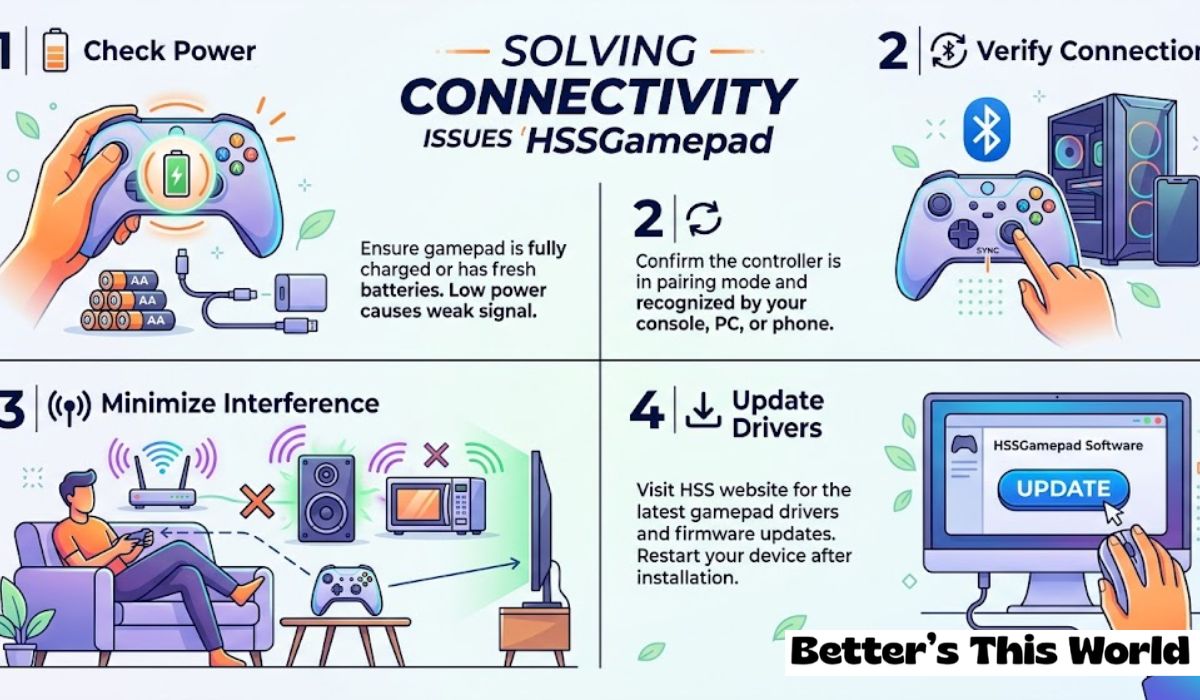
Maintaining a stable link between your controller and your gaming setup is essential for a seamless experience. When you encounter connectivity issues hssgamepad, it can disrupt your momentum and cause frustration during critical gameplay moments. This guide provides a comprehensive look at how to identify and resolve these technical hurdles without unnecessary complexity. By following a structured approach to hardware and software checks, you can ensure your device performs reliably every time you power it up. Troubleshooting these problems requires a bit of patience and a systematic look at both physical components and digital settings. Whether you are playing on a console or a high performance PC, the fundamentals of signal stability remain the same. We will explore the common culprits behind dropped signals and unresponsive buttons to help you get back into the action as quickly as possible.
Initial Hardware Assessment
Before diving into deep software configurations, it is vital to examine the physical state of your equipment. Often, the root cause of a failing connection is as simple as a loose cable or a depleted battery. If you are using a wired setup, inspect the USB ports on both the controller and the console or PC for any signs of debris or physical damage. Dust buildup can frequently prevent a clean data transfer, leading to intermittent signals. For those utilizing a wireless connection, ensure that the internal batteries are fully charged or that fresh replacements are inserted. Low power levels often result in a weak signal that drops frequently during intense sessions.
Additionally, consider the quality of the cables being used. Generic charging cables sometimes lack the data transfer capabilities required for high speed gaming peripherals. Swapping out your current wire for a high quality, shielded USB cable can immediately eliminate lag and disconnects. If the device has been dropped or exposed to moisture, internal components might be compromised, which would require professional repair. Starting with these basic physical checks saves time and prevents you from troubleshooting software issues that may not actually exist. Always ensure that the ports are tight and that there is no visible corrosion on the connectors to maintain a steady flow of information between the devices.
Wireless Interference Management
In a modern home filled with various electronic devices, signal interference is a common culprit for pairing failures. Many wireless peripherals operate on frequencies that overlap with household appliances like microwave ovens, cordless phones, and even high speed routers. To improve the stability of your connection, try to minimize the number of active Bluetooth devices in the immediate vicinity. If your gaming station is surrounded by smart home hubs or multiple smartphones, these signals can collide and cause the controller to lose its sync with the receiver. Switching your router to a different channel can also alleviate some of the congestion on the 2.4GHz band.
Physical barriers also play a significant role in signal strength. Metal desks, thick walls, or even glass cabinets can degrade the wireless wave as it travels from the handheld device to the console. Position your receiver in an open area with a direct line of sight to your seating position. If you are using a USB dongle, plugging it into a front facing port rather than the back of a computer tower can provide a much clearer path for the signal. Reducing the distance between the controller and the host device is often the quickest way to stabilize a flickering connection and ensure that every button press is registered without any noticeable delay.
Driver and Firmware Updates
Software serves as the bridge between your hardware and the operating system. If this bridge is outdated, you will likely experience significant bugs or a total lack of recognition by your computer. Manufacturers frequently release firmware updates to patch security holes and improve compatibility with new gaming titles. Visit the official support page for your device to check if there is a newer version of the firmware available. Installing these updates can recalibrate the internal sensors and communication protocols, often fixing persistent bugs that caused previous failures. This process usually involves connecting the device via a cable to a computer and running a small utility.
On the PC side, the operating system relies on specific drivers to translate button presses into in game actions. Open your device manager and look for any warning icons next to the game controller entry. If the system lists the device as unknown, you may need to manually uninstall the current driver and let the system rediscover the hardware. In some cases, using a generic HID driver provided by the OS is sufficient, but specialized software from the manufacturer usually offers better calibration tools. Keeping your software environment current ensures that your hardware can communicate effectively with the latest game engines and prevents crashes during launch.
Operating System Configuration
Sometimes the settings within your Windows or console environment are configured in a way that limits peripheral performance. Power saving modes are a frequent offender in this category. To conserve energy, many operating systems are programmed to turn off USB ports or Bluetooth radios if they perceive a period of inactivity. This can lead to the controller shutting down unexpectedly during a cutscene or a pause in the action. Adjusting your power plan to high performance or disabling the USB selective suspend setting can keep the connection alive indefinitely. This ensures the port remains powered regardless of the system state.
Furthermore, ensure that your OS is fully updated. Recent patches for Windows or console system software often include fixes for Bluetooth stacks and peripheral handling. If you are using a PC, check the privacy settings to ensure that apps have permission to access your radio and game controllers. In some instances, background applications or third party overlay software can conflict with the controller input. Performing a clean boot can help identify if another program is intercepting the signal or causing the driver to crash during use. Eliminating these background conflicts is a key step in creating a stable environment for any gaming peripheral.
Sync and Pairing Protocols
The process of establishing a handshake between a controller and its host requires both devices to be in the correct mode simultaneously. If the pairing sequence is interrupted or timed out, the devices may remember a partial or corrupted profile. To fix this, you should completely remove the device from your Bluetooth list or saved peripherals. Once the old profile is deleted, restart both the controller and the host system. This clear slate allows for a fresh synchronization process that often bypasses previous handshake errors. It is a simple reset that forces the hardware to renegotiate the connection terms.
When initiating the sync, refer to the LED indicators on the device. Most gamepads have specific flashing patterns that signify they are in discovery mode. If the lights do not behave as expected, the internal pairing button might be stuck or unresponsive. Some devices also feature a small reset pinhole on the underside. Using a small tool to press this button can restore the hardware to its factory settings, wiping out any glitched configurations. Once reset, the device should be much easier to pair with your preferred gaming platform. Ensure that no other devices are trying to pair at the same moment to avoid confusion during the handshake.
Internal Settings and Calibration
Once a connection is established, you might still face issues with input lag or unresponsive buttons. This is often a matter of calibration rather than a total loss of signal. Most modern gaming platforms include a built in calibration wizard that allows you to test the dead zones and sensitivity of your thumbsticks and triggers. If the software perceives the stick as moving even when you are not touching it, adjusting the dead zone can stabilize the character movement. This ensures that the data being sent over the connection is accurate and useful. Proper calibration can make an old controller feel brand new.
Inside individual games, there are often specific settings for controller types. Some titles might default to a different input method, causing your gamepad to seem unresponsive. Ensure the game is set to recognize external controllers as the primary input. If you are using a wrapper or an emulator to make your device compatible with older titles, double check the mapping settings. A single misconfigured button in the mapping software can make it seem like the device has disconnected when, in reality, it is simply sending commands that the game does not recognize. Fine tuning these settings provides a tailored experience for every genre you play.
Advanced Troubleshooting and Repair
If all the above steps fail to provide a stable link, there may be a deeper issue within the hardware circuitry. Over time, the internal antenna or the USB port solder joints can weaken due to repetitive use. If you are comfortable with electronics, you can check for loose connections inside the casing, but for most users, this is the point where manufacturer support becomes necessary. Checking the warranty status of your device is a smart move before attempting any DIY repairs that might void your coverage. Internal component failure is rare but can occur after years of heavy use or accidental damage.
Sometimes, the issue is not the gamepad at all, but the host device’s internal Bluetooth card or USB controller. Testing the gamepad on a different computer or console can help isolate where the fault lies. If the device works perfectly on a secondary system, you know the problem is localized to your primary gaming rig. This might mean you need to invest in a dedicated Bluetooth adapter or a new USB hub to handle the data load. Identifying the specific point of failure prevents you from replacing a perfectly functional controller when the real issue is a faulty port on your PC or console system.
Technical Specification Table
| Connection Component | Optimal State | Troubleshooting Action |
| Battery Health | Full Charge | Replace or recharge cells |
| Signal Distance | Within 2 meters | Remove physical obstacles |
| USB Port Type | USB 3.0 or higher | Switch to a direct port |
| Software Version | Latest Firmware | Run manufacturer update tool |
| Interference Level | Low 2.4GHz noise | Turn off nearby Bluetooth |
| Driver Status | WHQL Certified | Reinstall via Device Manager |
FAQs
Why does the device keep disconnecting during gameplay?
This is often caused by power saving settings in your operating system. Make sure that the USB selective suspend feature is turned off so the port stays active.
Can a low battery affect the signal quality?
Yes, as the battery dies, the wireless transmitter has less power to send signals, which leads to dropped inputs and intermittent connection issues.
Is it better to use a wired or wireless connection?
A wired connection is generally more stable and offers lower latency. If you are experiencing interference, switching to a high quality cable is the best solution.
How do I reset the internal memory of the controller?
Most devices have a small pinhole on the back. Inserting a paperclip for ten seconds will usually reset the pairing memory to factory defaults.
Will other Bluetooth devices interfere with my gamepad?
Yes, devices like wireless headsets and smartphones can occupy the same frequency. Keeping these away from your receiver can help stabilize the link.
Conclusion
Resolving connectivity issues hssgamepad is a process of elimination that starts with the simplest physical factors and moves toward complex software adjustments. By ensuring your hardware is clean, your batteries are charged, and your drivers are up to date, you can fix the majority of common problems. Remember to keep the path between your controller and receiver clear of obstructions and other wireless signals to maintain the best possible performance. If you find that the problem persists across multiple different devices, it may be time to look into a hardware replacement or professional repair services. However, most users find that a simple reset or a change in USB ports is enough to clear up any lag or signal drops. Staying proactive with firmware updates and maintaining a clean gaming environment will ensure that your equipment lasts for years to come. With a bit of patience and systematic testing, you can return to your gaming sessions with a reliable and responsive setup that won’t let you down during intense matches. Achieving a perfect link is the first step toward a competitive and enjoyable experience in any digital world you choose to explore.

How to Know When Your Roof Needs Replacement
Understanding IPTV Subscriptions for Arabic Entertainment and Streaming
Understanding Personal Injury Claims After an Accident

Key Benefits of Residential Elevators in Modern Homes
The Growing Role of IPTV in Modern Television
The Evolution of University Printing in the Digital Age

How to Reduce Snoring and Sleep Better Every Night

How Physical Therapy Relieves Pelvic Pain

FintechZoom.com: A Smart Resource for Financial News, Investment Education

How to Defend Drug Crime Charges

Tips for Sourcing Bedding Fabrics

Why British Property Investors Are Leveraging U.S. Real Estate Instead of Cashing Out

Guide to Choosing Industrial Portable Radios

Tips for Protecting Your Rights After an Accident

Why Sophisticated Global Investors Are Using Leverage Instead of Cash in U.S. Real Estate

Tips for Choosing Packaging Bags

Tips for Choosing Between Blinds and Shades

Building a Future, Not Just Buying a Home: Why Melbourne Families Are Choosing Smarter Communities

Why Palm Jumeirah Continues to Define the Future of Ultra-Prime Living in Dubai

How to Shop Smart During Festive Sales Without Compromising on Style?

How Child Custody Decisions Are Made In Boston

Streamlining Payroll Processes for Small Teams

The Future of Waterfront Luxury: Why Hudayriyat Island is Abu Dhabi’s Premier Investment Hub

Why Expanding Game Libraries Is Important for Digital Casinos

Identifying 3463215186: A Guide to Numeric Security

Incestfl8x: System Update and Performance Framework

белочкш: Meaning, Context, and Its Role in Digital Expression

BetterThisWorldcom: A Comprehensive Guide to Personal Growth

Stocks BetterThisWorld: Learn Investing With Calm Focus And Purpose

Betterthisfacts Tips from Betterthisworld: Practical Guide to Smarter Living and Everyday Success

Betterthisfacts Tips by Betterthisworld: Practical Insights for Smarter Daily Living

ABCBetting AG New Site: Official Access and Platform Guide

Money BetterThisWorld: Financial Growth Mindful Living and Personal Empowerment

BetterThisWorld.com Your Source for Motivation Money Guidance Tech Insights and Modern Living

Irobux Login: Accessing Features & Account Security Tips

Charutbaye: Exploring Cultural Significance and Heritage

Sryzvduebbcylzk: Meaning, Structure, and Digital Use Explained

Guide to Understanding the Error 8379xnbs8e02328ws Code

BTWradiovent event by BetterThisWorld

Why Eurothits Is Gaining Attention in Today’s Digital Environment

BetterThisWorld Stocks | Sustainable Market Growth 2026

BetterThisWorld Business: Redefining Impact in the Modern Era

Python 54axhg5: Programming Guide for Modern Development

Blog ThriftyEventsNet: Smart Guide to Budget Friendly Events and Planning

Betterthisworld.com Success: Modern Roadmap to Growth & Achievement

Gaming Vivid2201 Patches: Updates Improvements and Player Experience

Betterthisworld Business: Guide to Smart Growth and Modern Success

The Endless Barrel Roll Challenge: Exploring the Internet’s Wildest Gaming Stunt

Better ThisWorld.com: Exploring Purpose Driven Digital Content