Investing
High-Value Investment Hacks Discommercified for You


Introduction
The modern financial landscape is often saturated with high-pressure sales tactics and glossy advertisements that promise quick riches. However, the true path to financial independence lies in a different approach. By seeking out investment hacks discommercified from the typical marketing noise, an individual can focus on the raw mechanics of wealth creation. This philosophy centers on the idea that the best financial decisions are often the most boring ones, those that rely on mathematics and patience rather than the latest social media trend or celebrity endorsement.
To achieve genuine success, one must learn to peel back the layers of commercial interests that surround the investment world. Most of the advice available in the mainstream media is designed to generate commissions for brokers or clicks for news outlets. When we look for strategies that have been stripped of these commercial biases, we find a set of principles that emphasize low costs, broad diversification, and the power of time. This guide explores how to navigate the markets with a clear head, ensuring that every dollar invested is working for you, rather than for the middleman who sold you the idea.
The Power of Fundamental Wealth Principles
At the heart of any successful portfolio is a commitment to the basic laws of economics. When you move away from the flashy products offered by big banks, you start to see that wealth is built on the spread between what you earn and what you spend. The most effective way to grow your capital is to consistently direct that surplus into productive assets. These assets can range from equity in established companies to real estate or even your own skill set. The key is to ensure that the asset has a clear path to generating value over the long term, independent of what the current market sentiment might suggest.
Focusing on fundamentals requires a shift in mindset. Instead of looking for the next big thing, the successful individual looks for stability and proven track records. This involves analyzing cash flows, understanding debt-to-equity ratios, and evaluating the competitive advantage of a business. By prioritizing these metrics over the hype found in commercial brochures, you create a foundation that can withstand economic downturns. This grounded approach is the essence of building a durable financial future that is not dependent on the whims of the current promotional cycle.
Minimizing Intermediary Costs for Better Returns
One of the most overlooked aspects of growing a portfolio is the impact of fees. Over several decades, even a small percentage taken by a fund manager can result in hundreds of thousands of dollars in lost gains. This is why looking for options that have been simplified and removed from expensive management structures is so vital. Passive index funds and exchange-traded funds have revolutionized this space by offering broad market exposure for a fraction of the cost of actively managed alternatives. By keeping more of your money in the market, you allow the engine of compounding to work at its full capacity.
Beyond management fees, there are also transaction costs and taxes to consider. High-frequency trading or constantly switching between different assets creates a drag on your performance. A more refined strategy involves making fewer, more deliberate moves. This not only reduces the amount you pay in brokerage commissions but also helps in managing capital gains tax liabilities. When you treat your investments as a long-term partnership rather than a series of trades, you naturally align yourself with the most cost-effective path to growth. This efficiency is a hallmark of a sophisticated, non-commercial approach to finance.
Diversification as a Shield Against Volatility
The idea of not putting all your eggs in one basket is a timeless piece of advice for a reason. In an unpredictable world, diversification acts as the primary defense against the total loss of capital. This does not mean simply owning many different stocks; it means owning assets that react differently to various economic conditions. For example, while stocks might thrive in a period of growth, bonds or precious metals might offer protection during a recession. A well-constructed portfolio balances these different forces to provide a smoother ride toward your financial goals.
True diversification also extends across geographical boundaries. Relying solely on the economy of a single country can be a risky move, as political shifts or localized downturns can impact your net worth significantly. By including international assets, you tap into the growth of emerging markets and the stability of other developed nations. This global perspective helps to neutralize the specific risks associated with any one region. When you view your holdings through a lens of global utility rather than local popularity, you achieve a level of resilience that is rarely found in the portfolios of those who follow only the most popular local trends.
The Psychological Advantage of Long Term Thinking
Success in the markets is often as much about temperament as it is about intelligence. The ability to remain calm when everyone else is panicking is a trait that defines the world’s most successful individuals. This psychological resilience is easier to maintain when you are not constantly bombarded by the “buy” and “sell” signals of the commercial financial press. By detaching yourself from the daily fluctuations of the market, you can focus on the five-year or ten-year horizon. This long-term perspective allows you to see market dips not as disasters, but as opportunities to acquire more value at a lower price.
Developing this patience requires a deliberate effort to tune out the noise. It means setting up automated systems that manage your contributions and rebalancing without requiring your constant attention. When your strategy is automated, you remove the emotional element that often leads to buying high and selling low. This disciplined approach ensures that you stay the course even during periods of extreme volatility. By treating your financial journey as a marathon rather than a sprint, you naturally avoid the pitfalls of greed and fear that ruin so many other participants in the market.
Analyzing Intrinsic Value in a Noisy Market
To identify a truly great opportunity, one must be able to calculate what an asset is actually worth, separate from its current price. This concept of intrinsic value is a cornerstone of the most successful philosophies. It involves looking at the future earnings potential of an asset and discounting it back to the present day. If the price you pay is significantly lower than this calculated value, you have a margin of safety. This buffer protects you if your projections are slightly off or if the market takes longer than expected to recognize the asset’s true worth.
Finding these opportunities requires a commitment to research. It means reading annual reports, understanding industry trends, and looking for companies with “moats” or sustainable competitive advantages. These moats could be anything from a strong brand and high switching costs for customers to proprietary technology or a dominant market share. When you find a business that can generate high returns on capital over a long period, you have found a goldmine. The goal is to collect as many of these high-quality “machines” as possible and let them work for you over the decades.
Strategies for Sustainable Passive Income
While growth is important, the ultimate goal for many is to reach a point where their assets provide enough income to cover their lifestyle. This is where the focus shifts toward yield-generating assets such as dividend-paying stocks, real estate rentals, or high-yield bonds. A sustainable income strategy is built on the reliability of these payouts. You want to look for entities that have a long history of not just paying, but increasing their distributions every year. This “income growth” is a powerful hedge against inflation and provides a sense of security that a fluctuating account balance cannot.
Creating this stream of income requires a careful balance between yield and safety. A very high yield can sometimes be a red flag, indicating that the market expects a cut in the payout. A more prudent approach is to look for moderate, well-covered yields from companies with strong balance sheets. Over time, as these companies grow their earnings, your personal “yield on cost” will rise, often reaching double digits if you hold the assets long enough. This steady accumulation of cash flow is what eventually allows for true financial freedom, providing the resources to live life on your own terms.
Adapting to Changing Economic Environments
The world does not stand still, and neither should your approach to managing wealth. While the core principles remain the same, the specific tactics you use might need to shift as the global economy evolves. We are currently seeing a rise in digital assets, shifts in energy production, and changes in the way we work. A successful person remains curious and open to these changes without becoming a victim of “shiny object syndrome.” This means carefully evaluating new technologies or asset classes through the same rigorous framework used for traditional ones.
Adaptability also involves regular check-ins on your goals and risk tolerance. As you age or your life circumstances change, your need for liquidity or your ability to handle volatility will shift. A strategy that worked in your twenties might not be appropriate in your fifties. By staying engaged with your financial plan and making small, incremental adjustments, you ensure that your portfolio remains aligned with your current reality. This proactive stance is much more effective than waiting for a crisis to force a change. It allows you to navigate the future with confidence, knowing that you are prepared for whatever the market may bring.
FAQs
What is the core idea behind these non-commercial strategies? The focus is on using mathematics, fundamental analysis, and long-term compounding to build wealth, rather than following the hyped-up, high-fee products often pushed by mainstream commercial financial institutions.
How can I start investing with very little money? The best way to start is through low-cost index funds or fractional shares. Many modern platforms allow you to begin with just a few dollars, which is a great way to build the habit of consistent saving and investing.
Is it possible to beat the market using these methods? While beating the market is difficult, the goal of this approach is to achieve consistent, sustainable growth that meets your personal financial goals while minimizing risk and unnecessary expenses.
How often should I check my portfolio? For long-term growth, checking your portfolio once a quarter or even once a year is usually sufficient. Over-monitoring can lead to emotional decisions based on short-term market fluctuations.
What is the most important factor in wealth creation? Time is generally considered the most important factor. The earlier you start, the more time your money has to compound, which is far more impactful than trying to “time” the market or find the perfect single stock.
Conclusion
Building a significant financial foundation is a journey that requires discipline, knowledge, and a commitment to looking past the superficial. By applying investment hacks discommercified for the modern era, you place yourself in a position of strength. You move away from being a consumer of financial products and become an owner of productive assets. This transition is the key to breaking free from the cycle of living paycheck to paycheck and moving toward a future of abundance and security. The principles outlined here are not secret, but they are rarely followed because they require patience in a world that demands instant results.
As you move forward, remember that the most successful individuals are those who can keep their heads when others are losing theirs. Stay focused on the fundamentals, keep your costs low, and let the power of compounding do the heavy lifting for you. Financial freedom is not a destination that you reach overnight; it is the result of thousands of small, smart decisions made over a lifetime. By sticking to a grounded, non-commercial approach, you ensure that your wealth is built on a rock-solid foundation that will serve you and your family for generations to come.
The Foundation of Modern Financial Freedom
Achieving financial stability in an era of fluctuating markets and rising living costs requires more than just a savings account; it requires a systematic approach to money management. This is where the concept of aggr8budgeting becomes essential for the modern consumer. By integrating various streams of income and expenses into a single, cohesive strategy, individuals can gain a bird’s-eye view of their economic health. This methodology is not about restriction, but rather about empowerment and intentionality. It allows you to see exactly where every dollar goes, ensuring that your hard-earned money is working toward your long-term goals rather than disappearing into mindless subscriptions or impulsive purchases.
The transition to a more structured way of handling personal capital can feel daunting at first, but the rewards are immediate. When you implement aggr8budgeting, you are essentially building a roadmap for your future. Whether your goal is to purchase a new home, travel the world, or retire comfortably, having a clear plan is the only way to turn those dreams into reality. This guide will walk you through the core pillars of effective financial oversight, providing practical advice on everything from debt reduction to investment planning, all while maintaining a balanced and sustainable lifestyle.
Understanding the Basics of Income Tracking
The first step in any successful financial plan is a thorough assessment of your total incoming revenue. This includes your primary salary, side hustles, dividends, and any passive income streams you may have established. By categorizing these sources, you can determine your “true” monthly net income. Many people make the mistake of budgeting based on their gross pay, which leads to discrepancies when taxes and insurance premiums are deducted. A realistic view of what actually hits your bank account is the only reliable starting point for a sustainable plan.
Consistency is key when monitoring these numbers. Using a digital ledger or a dedicated spreadsheet allows you to visualize fluctuations in your earnings over time. For those with variable incomes, such as freelancers or commission-based professionals, calculating a six-month average can provide a safer baseline for planning. Once you have a firm grasp on your total resources, you can begin to allocate funds to various life categories with confidence, knowing that your calculations are based on hard data rather than optimistic estimates. This clarity is the bedrock of fiscal responsibility and mental peace.
Categorizing Monthly Fixed Expenses
Once your income is clear, the next priority is identifying and isolating your fixed costs. These are the non-negotiable payments that remain relatively constant each month, such as rent or mortgage, utility bills, car insurance, and minimum debt payments. These expenses form the “skeleton” of your financial life. Identifying them early helps you understand your “burn rate”—the minimum amount of money you need to survive each month without any luxuries. This number is vital for calculating your emergency fund requirements and general risk tolerance.
To optimize this area, it is worth auditing these fixed costs at least twice a year. Often, we continue to pay for insurance policies or internet packages that no longer offer the best value. Negotiating a lower rate or switching providers can free up significant capital that can then be redirected toward savings or investments. While these expenses are called “fixed,” there is often more flexibility than one might think. Reducing your baseline requirements even by a small percentage can have a massive cumulative effect on your ability to build wealth over several years.
Strategies for Managing Variable Spending
Variable spending represents the area where most people lose control of their finances. This category includes groceries, entertainment, dining out, and personal shopping. Unlike fixed costs, these are highly elastic and depend heavily on daily choices. To manage this effectively, many experts recommend using a percentage-based system or a “bucket” method. By setting a hard limit on these categories at the start of the month, you force yourself to prioritize the activities and items that truly bring you joy while cutting out the filler that adds little value.
The psychological aspect of spending is just as important as the math. Implementing a “24-hour rule” for non-essential purchases can significantly reduce impulse buying. If you still want the item after a day of reflection, it is more likely a considered choice than a momentary whim. Tracking these daily transactions in real-time is much more effective than reviewing a bank statement at the end of the month when it is too too late to change behavior. Staying mindful of these small outlays ensures that they do not collectively sabotage your broader financial aspirations.
The Importance of an Emergency Fund
Life is unpredictable, and a solid financial plan must account for the unexpected. An emergency fund acts as a buffer between you and the high-interest debt that often follows a medical emergency, car breakdown, or sudden job loss. Most financial advisors suggest aiming for three to six months of basic living expenses. This fund should be kept in a liquid, easily accessible account, such as a high-yield savings account, so that it is available the moment a crisis occurs without the need to sell investments at a loss.
Building this fund should be a top priority, often taking precedence over aggressive investing or luxury spending. There is a profound psychological benefit to knowing that you have a safety net; it reduces stress and allows you to make better long-term decisions rather than acting out of desperation. Once the fund is established, it should only be used for true emergencies—not for planned expenses like vacations or holiday gifts. Maintaining the integrity of this reserve is essential for long-term security and serves as the ultimate insurance policy against the volatility of the modern world.
Tackling Debt with Targeted Methods
Debt can be a significant roadblock on the path to prosperity, but it is a hurdle that can be cleared with a focused approach. Two popular methods are the “Snowball” and “Avalanche” techniques. The Snowball method involves paying off the smallest balances first to build psychological momentum, while the Avalanche method targets the highest interest rates first to minimize the total cost of the debt. Choosing the right one depends on your personality; if you need quick wins to stay motivated, go with the former. If you are driven strictly by the math, the latter is superior.
Regardless of the method, the most important factor is consistency and avoiding the accumulation of new debt while paying off the old. Consolidating high-interest credit card balances into a lower-interest personal loan can also be a savvy move, provided you do not use the newly freed credit limit for more spending. Viewing debt repayment not as a burden, but as a guaranteed return on your investment—since you are saving on future interest—can change your perspective and help you stay the course during the months when progress feels slow.
Planning for Long Term Wealth and Retirement
Once the foundations of tracking, emergency funding, and debt management are in place, the focus shifts toward growth. Investing is the process of putting your surplus capital to work so that it generates its own income over time. This typically involves a diversified portfolio of stocks, bonds, and perhaps real estate. The goal is to benefit from the power of compound interest, where your earnings begin to earn their own earnings. Starting early is far more important than starting with a large amount, as time is the most valuable asset in the world of finance.
Retirement planning should also involve taking full advantage of employer-sponsored plans or government-incentivized accounts. These often come with tax benefits that can significantly accelerate your progress. It is wise to automate your investments so that a portion of your income is diverted to these accounts before you even see it. This “pay yourself first” mentality ensures that your future self is taken care of regardless of your current lifestyle desires. Regularly reviewing your portfolio to ensure it aligns with your age and risk tolerance will keep you on the right path toward eventual work-optional living.
Developing a Mindset of Financial Abundance
The final component of a successful economic strategy is the mental framework you bring to the table. Many people view money through a lens of scarcity, which can lead to either hoarding or reckless spending as a form of rebellion. Shifting toward a mindset of abundance involves recognizing that wealth is a tool for creating the life you want, rather than an end in itself. This includes practicing gratitude for what you have and being intentional about where your resources are directed. It also means being willing to invest in yourself through education and personal development.
A healthy relationship with money also involves the ability to be generous. Whether it is through charitable giving or supporting friends and family, the act of giving reinforces the idea that you have enough. This mindset reduces the fear associated with financial management and makes the process of following a budget feel like a choice rather than a chore. By aligning your spending with your core values, you ensure that your financial life is not just stable, but also deeply fulfilling. This holistic approach is what truly defines lasting success in the realm of personal finance.
Comparison of Popular Budgeting Frameworks
| Method Name | Core Philosophy | Best For |
| 50/30/20 Rule | 50% Needs, 30% Wants, 20% Savings | Beginners seeking simplicity |
| Zero-Based | Every dollar is assigned a job | Disciplined trackers and optimizers |
| Envelope System | Cash-only for variable categories | Curbing overspending habits |
| Pay Yourself First | Automate savings before spending | Those who struggle with manual tracking |
| aggr8budgeting | Holistic aggregation of all data | Comprehensive long-term wealth building |
FAQs
How often should I review my financial plan?
A monthly check-in is ideal for most people. This allows you to adjust for any unexpected expenses from the previous month and set goals for the upcoming one without the process becoming an overwhelming daily task.
What is the best way to handle a sudden windfall?
If you receive a bonus or inheritance, a common rule is the “10% Rule.” Spend 10% on something you enjoy, and use the remaining 90% to pay down debt or boost your long-term investments. This balances immediate gratification with future security.
Should I stop investing while I am paying off debt?
It depends on the interest rate. If your debt has a very high interest rate (like a credit card), it is usually better to pay that off first. However, if your employer offers a retirement match, you should almost always contribute enough to get the full match, as that is a 100% return on your money.
Is it necessary to use expensive software for tracking?
Not at all. While specialized apps can be helpful for automation, a simple spreadsheet or even a physical notebook can be just as effective if you stay consistent with your entries.
Conclusion
Mastering the art of aggr8budgeting is a transformative journey that extends far beyond mere numbers on a screen. It is a commitment to taking full ownership of your life and your future. Throughout this guide, we have explored the essential steps of identifying income, managing both fixed and variable expenses, and protecting yourself with an emergency fund. We have also discussed the strategic elimination of debt and the vital importance of long-term investing to ensure a comfortable and secure retirement.
Financial success is not a destination but a continuous process of refinement and discipline. By adopting the right mindset and utilizing the structured methods outlined here, you can move away from the stress of living paycheck to paycheck and toward a life of choice and opportunity. The most important thing is to start today, regardless of your current situation. Every small adjustment you make to your spending habits and every dollar you save is a building block for the wealth you will enjoy tomorrow. Stay consistent, stay informed, and remember that the goal of a well-managed budget is to give you the freedom to live your life to the absolute fullest.
Introduction
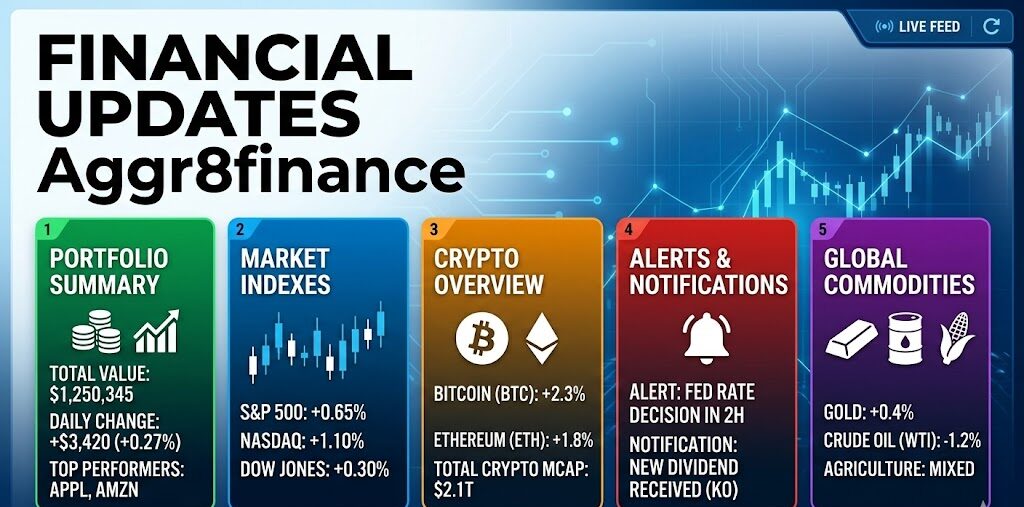
In an era where the global economy shifts at the speed of a digital transaction, staying informed is no longer a luxury but a fundamental necessity for financial survival. Navigating the complexities of the stock market, interest rate fluctuations, and emerging fintech requires a reliable stream of information. This is where financial updates aggr8finance serve as a vital resource for both seasoned investors and those just beginning their journey toward fiscal independence. By aggregating data from diverse sectors, these insights allow individuals to see the “big picture” of the economy rather than just isolated events.
The modern investor faces a barrage of data every day, from inflation reports to corporate earnings calls. Without a structured way to process this information, it is easy to fall victim to market noise or emotional decision-making. Utilizing financial updates aggr8finance helps filter out the distractions, focusing instead on the core drivers of value and growth. Whether you are managing a personal retirement account or overseeing a corporate portfolio, understanding the underlying mechanisms of the current financial climate is essential. This article explores the various facets of the modern economic landscape, providing a deep dive into the trends that are currently shaping the way we earn, save, and invest in a rapidly changing world.
Global Market Trends and Performance
The performance of international markets serves as a primary barometer for the health of the global economy. When we observe major indices such as the S&P 500, the FTSE 100, or the Nikkei 225, we are seeing the collective sentiment of millions of participants. Recent trends suggest a pivot toward defensive positioning as central banks continue to grapple with persistent inflationary pressures. Investors are increasingly looking at energy and healthcare sectors as potential safe havens, while technology remains a volatile but high-growth area of interest. Understanding these broad movements is the first step in creating a resilient strategy.
Geopolitical events also play a massive role in how markets behave. Trade agreements, regional conflicts, and changes in government policy can send ripples through supply chains, affecting corporate profitability overnight. For example, a shift in semiconductor manufacturing policy in Asia can immediately impact the valuation of tech firms in Silicon Valley. By monitoring these high-level shifts, individuals can anticipate volatility rather than merely reacting to it. The goal is to identify patterns that suggest long-term growth rather than short-term spikes, ensuring that your capital is allocated where it has the best chance of compounding over time despite the inevitable fluctuations of the daily ticker.
The Impact of Interest Rate Shifts
Central bank policy is perhaps the most influential force in the financial world today. When the Federal Reserve or the European Central Bank adjusts interest rates, it changes the cost of borrowing for everyone from home buyers to multi-national conglomerates. High interest rates are typically designed to cool an overheating economy and curb inflation, but they also make it more expensive for companies to expand. This often leads to a re-evaluation of stock prices, as the discounted future cash flows of a business are worth less when rates are high. Keeping a close watch on these policy changes is crucial for anyone with debt or investments.
For the average consumer, these shifts manifest in mortgage rates and credit card interest. For the investor, they represent a change in the attractiveness of bonds versus stocks. When rates rise, fixed-income assets like Treasury bonds often become more appealing because they offer a guaranteed return with lower risk. Conversely, when rates are cut, the market often sees a surge in equity buying as investors seek higher returns in the stock market. Understanding the “interest rate cycle” allows you to position your assets to benefit from the prevailing economic wind, rather than fighting against it. It is a fundamental component of strategic wealth management.
Evolution of Digital Assets and FinTech
The traditional banking sector is undergoing a massive transformation driven by technological innovation. Decentralized finance, blockchain, and digital currencies are no longer fringe concepts; they are being integrated into the core infrastructure of global finance. This evolution offers unprecedented transparency and speed, but it also introduces new risks that must be carefully managed. The rise of digital wallets and peer-to-peer lending platforms has democratized access to financial tools, allowing individuals in developing nations to participate in the global economy more easily than ever before.
Beyond just cryptocurrency, the “FinTech” revolution includes the automation of investment through robo-advisors and the use of artificial intelligence to detect fraud. These tools are making financial management more efficient and lower in cost for the end user. However, the regulatory environment is still catching up to these advancements. Investors must stay informed about new laws and compliance standards that could affect the stability of digital platforms. As traditional institutions begin to adopt these technologies, the line between “old finance” and “new finance” is blurring, creating a hybrid ecosystem where agility and digital literacy are the most valuable assets an investor can possess.
Strategies for Personal Wealth Building
Building sustainable wealth requires more than just picking the right stocks; it involves a holistic approach to money management. This starts with a clear understanding of cash flow—knowing exactly what is coming in and what is going out. In a high-inflation environment, the “real value” of cash decreases over time, making it essential to invest in assets that outpace the rate of inflation. Real estate, commodities, and diversified equity portfolios have historically served as effective hedges against the eroding power of a currency.
Another pillar of wealth building is tax efficiency. By utilizing retirement accounts, health savings accounts, and other tax-advantaged vehicles, individuals can significantly increase their net returns over several decades. Diversification remains the “only free lunch” in finance, as it allows you to reduce risk without necessarily sacrificing return. Spreading investments across different asset classes, industries, and geographic regions ensures that a downturn in one area does not wipe out your entire portfolio. Consistency is the final ingredient; regular, disciplined contributions to an investment account often outperform attempts to “time the market.” This long-term perspective is the hallmark of successful wealth accumulation.
Analyzing Corporate Earnings and Growth
Corporate earnings reports are the “report cards” of the business world, providing a quarterly look into the profitability and operational efficiency of public companies. Analysts look beyond the headline revenue numbers to examine profit margins, debt levels, and future guidance provided by executives. A company might report record sales, but if its expenses are growing even faster, its stock price may still fall. Understanding how to read these reports allows investors to differentiate between companies that are genuinely growing and those that are merely benefiting from temporary market conditions.
Growth companies, particularly in sectors like artificial intelligence and green energy, often reinvest their profits back into the business rather than paying dividends. This can lead to massive capital appreciation, but it also makes the stock more sensitive to market sentiment. On the other hand, “value” companies are often more established and provide steady income through dividends, making them attractive for those seeking stability. By analyzing these fundamentals, you can align your investment choices with your personal risk tolerance and financial goals. The ability to distinguish between a temporary setback and a structural flaw in a company’s business model is what separates professional analysts from casual observers.
Managing Risk in Volatile Environments
Risk management is the art of protecting your downside while still participating in the upside of the market. In periods of high volatility, it is easy to let fear dictate your actions, often leading to selling at the bottom of a cycle. Effective risk management involves setting “stop-loss” orders, maintaining an emergency fund, and ensuring that no single investment represents too large a percentage of your total net worth. It also means understanding the difference between “market risk”—which affects everyone—and “specific risk,” which is tied to a particular company or industry.
One of the best ways to manage risk is through education and staying updated on financial updates aggr8finance. When you understand why a market is moving, you are less likely to panic. Hedging strategies, such as buying options or investing in inverse ETFs, can also provide a level of insurance against market crashes, though they require a higher level of expertise to execute correctly. Ultimately, the goal is to create a “bulletproof” financial plan that can withstand a variety of economic scenarios. Whether the market is in a bull or bear phase, a well-thought-out risk management strategy ensures that you remain in the game long enough to see your long-term goals come to fruition.
The Role of Psychology in Investing
The most significant obstacle to financial success is often the human brain. Behavioral economics has shown that humans are prone to cognitive biases, such as “loss aversion,” where the pain of losing money is twice as powerful as the joy of gaining it. This often leads investors to hold onto losing positions for too long or sell winning positions too early. “Herd mentality” is another common trap, where individuals rush into an investment simply because everyone else is doing it, often at the peak of a bubble. Recognizing these emotional triggers is essential for maintaining a rational approach.
To combat these biases, many successful investors rely on automated systems and strict sets of rules. By taking the emotion out of the process, you can stick to your strategy even when the headlines are screaming for attention. Staying grounded through financial updates aggr8finance provides the objective data needed to counter subjective fears. It is helpful to remember that markets are a reflection of human behavior, and periods of irrational exuberance or extreme pessimism are inevitable cycles. By staying disciplined and focusing on the fundamentals, you can avoid the common psychological traps that derail so many financial plans.
Comparison of Asset Class Performance
| Asset Class | Typical Risk Level | Primary Benefit | Current 2026 Outlook |
| Equities (Stocks) | Moderate to High | Long-term growth | Positive for Tech/Energy |
| Fixed Income (Bonds) | Low to Moderate | Income and stability | Attractive with current rates |
| Real Estate | Moderate | Hedge against inflation | Stable but location-dependent |
| Commodities (Gold) | High | Wealth preservation | Strong during geopolitical stress |
| Digital Assets | Very High | Potential for rapid gains | Highly volatile; regulatory focus |
FAQs
How often should I check for financial updates aggr8finance?
For long-term investors, a weekly or monthly review is usually sufficient to stay informed without becoming overwhelmed by daily market noise. However, if you are an active trader, daily updates are necessary.
What is the best way to start investing with a small amount of money?
Micro-investing apps and fractional shares are excellent starting points. They allow you to buy small portions of expensive stocks or ETFs, making it easy to build a diversified portfolio with as little as $5 or $10.
Why is diversification so important?
Diversification prevents a single bad event from destroying your entire portfolio. By owning different types of assets, you ensure that when one sector is down, another may be up or stable.
Are digital assets a safe investment in 2026?
Safety is relative. Digital assets remain highly speculative and should only represent a small portion of a portfolio. Always ensure you are using reputable platforms and practicing high levels of digital security.
Conclusion
Navigating the modern financial landscape requires a blend of historical perspective, technological literacy, and emotional discipline. As we have explored, everything from interest rate policy to the rise of FinTech plays a crucial role in how wealth is created and preserved. Relying on financial updates aggr8finance provides the necessary data to make informed choices rather than guesses. In an environment where change is the only constant, the ability to synthesize information and adapt your strategy is the most valuable skill you can develop. It is not about predicting the future perfectly, but about being prepared for a variety of possible outcomes.
By focusing on long-term wealth-building strategies, managing risk effectively, and understanding the psychological biases that influence our decisions, anyone can work toward a more secure financial future. The tools available to the modern investor are more powerful than ever before, but they must be used with wisdom and caution. Whether you are looking to retire comfortably, fund an education, or build a business, the principles of sound finance remain the same. Stay curious, stay informed, and remain committed to your goals, and you will find that the complexities of the market become opportunities for growth.

How to Know When Your Roof Needs Replacement
Understanding IPTV Subscriptions for Arabic Entertainment and Streaming
Understanding Personal Injury Claims After an Accident

Key Benefits of Residential Elevators in Modern Homes
The Growing Role of IPTV in Modern Television
The Evolution of University Printing in the Digital Age

How to Reduce Snoring and Sleep Better Every Night

How Physical Therapy Relieves Pelvic Pain

FintechZoom.com: A Smart Resource for Financial News, Investment Education

How to Defend Drug Crime Charges

Tips for Sourcing Bedding Fabrics

Why British Property Investors Are Leveraging U.S. Real Estate Instead of Cashing Out

Guide to Choosing Industrial Portable Radios

Tips for Protecting Your Rights After an Accident

Why Sophisticated Global Investors Are Using Leverage Instead of Cash in U.S. Real Estate

Tips for Choosing Packaging Bags

Tips for Choosing Between Blinds and Shades

Building a Future, Not Just Buying a Home: Why Melbourne Families Are Choosing Smarter Communities

Why Palm Jumeirah Continues to Define the Future of Ultra-Prime Living in Dubai

How to Shop Smart During Festive Sales Without Compromising on Style?

How Child Custody Decisions Are Made In Boston

Streamlining Payroll Processes for Small Teams

The Future of Waterfront Luxury: Why Hudayriyat Island is Abu Dhabi’s Premier Investment Hub

Why Expanding Game Libraries Is Important for Digital Casinos

Identifying 3463215186: A Guide to Numeric Security

Incestfl8x: System Update and Performance Framework

белочкш: Meaning, Context, and Its Role in Digital Expression

BetterThisWorldcom: A Comprehensive Guide to Personal Growth

Stocks BetterThisWorld: Learn Investing With Calm Focus And Purpose

Betterthisfacts Tips from Betterthisworld: Practical Guide to Smarter Living and Everyday Success

Betterthisfacts Tips by Betterthisworld: Practical Insights for Smarter Daily Living

ABCBetting AG New Site: Official Access and Platform Guide

Money BetterThisWorld: Financial Growth Mindful Living and Personal Empowerment

BetterThisWorld.com Your Source for Motivation Money Guidance Tech Insights and Modern Living

Irobux Login: Accessing Features & Account Security Tips

Charutbaye: Exploring Cultural Significance and Heritage

Sryzvduebbcylzk: Meaning, Structure, and Digital Use Explained

Guide to Understanding the Error 8379xnbs8e02328ws Code

BTWradiovent event by BetterThisWorld

Why Eurothits Is Gaining Attention in Today’s Digital Environment

BetterThisWorld Stocks | Sustainable Market Growth 2026

BetterThisWorld Business: Redefining Impact in the Modern Era

Python 54axhg5: Programming Guide for Modern Development

Blog ThriftyEventsNet: Smart Guide to Budget Friendly Events and Planning

Betterthisworld.com Success: Modern Roadmap to Growth & Achievement

Gaming Vivid2201 Patches: Updates Improvements and Player Experience

Betterthisworld Business: Guide to Smart Growth and Modern Success

The Endless Barrel Roll Challenge: Exploring the Internet’s Wildest Gaming Stunt

Better ThisWorld.com: Exploring Purpose Driven Digital Content